
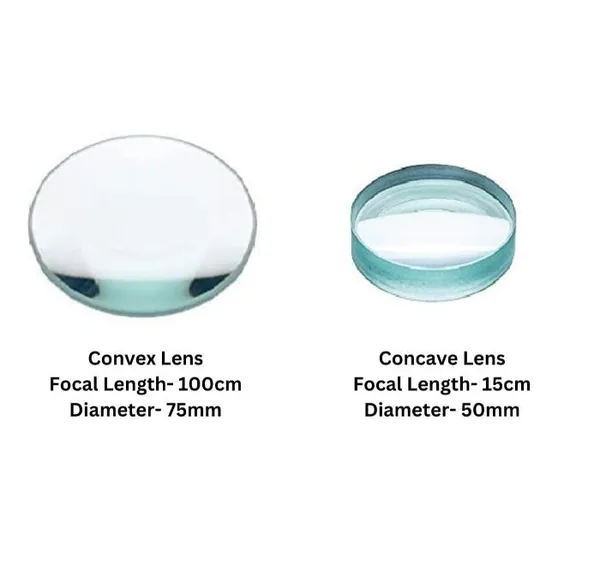

DIY Telescope Kit 75 mm Convex Lens 100 cm Focal Length and 50 mm Concave L..More
₹330
₹599
44% OffFinal Price inclusive of all taxes
Cash on Delivery
Get it delivered in 4-9 days
size
FREE SIZE
Product Description
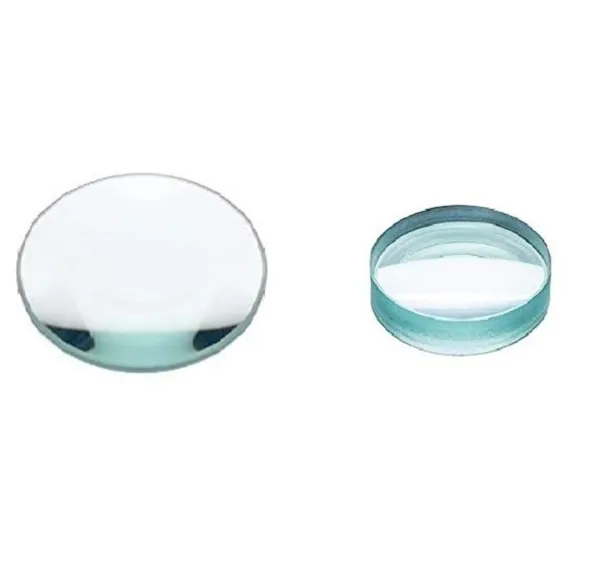
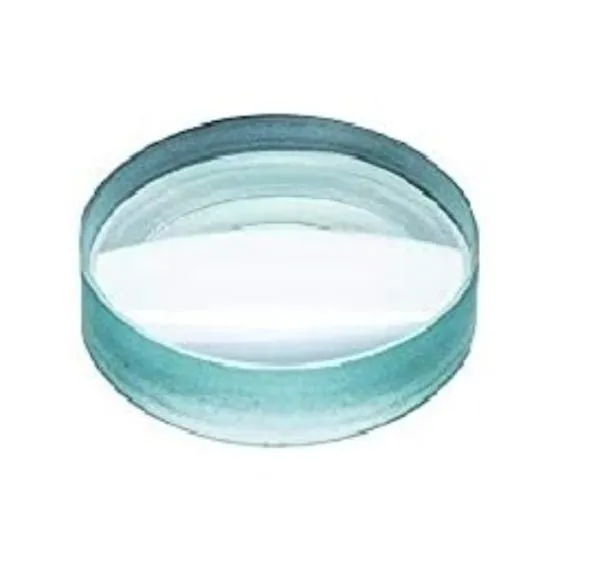
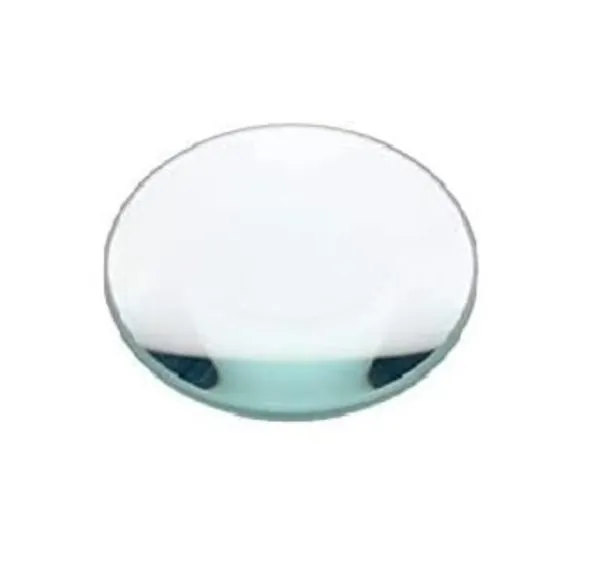
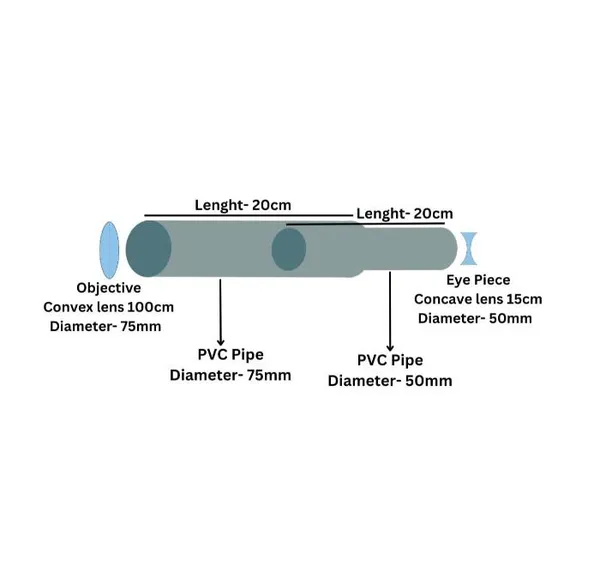
Steps to Make Telescope: Take two pieces of 20 cm PVC pipes of diameter 75 mm and 50 mm. Paste 75 mm convex lens to 75 mm PVC pipe and 50 mm concave lens to 50 mm diameter PVC pipe. Now insert 50 mm PVC pipe into 75 mm PVC pipe.
Now Telescope is ready, we can adjust magnification of Telescope by changing position of both the pipes.
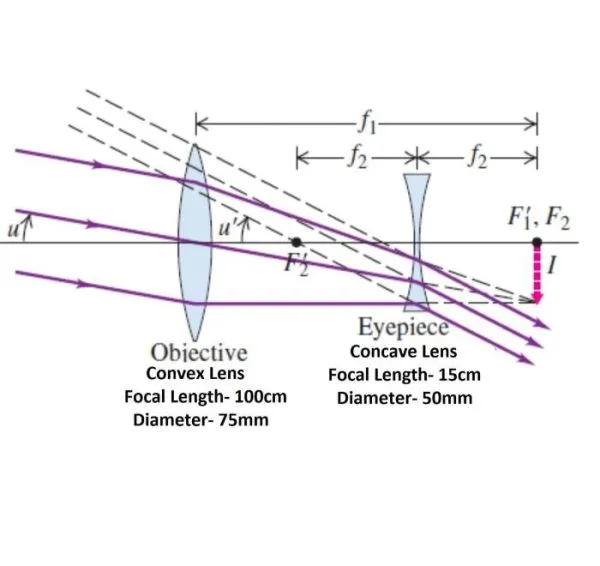
The focal length of a lens depends on the curvature of the lens surface. A basic refracting telescope consists of two lenses. The larger, primary lens is called the objective, while the second lens, the eyepiece, is used to view the image produced by the objective.
In a telescope, the lens held next to your eye is called the eyepiece and is usually a short focal length lens or a combination of lenses. The lens at the other end of the telescope is called the objective lens.
Telescopes have several advantages over eyes, including larger light-collecting areas; collecting light for longer periods of time; and the ability to detect wavelengths of light invisible to humans.
Now Telescope is ready, we can adjust magnification of Telescope by changing position of both the pipes.
The focal length of a lens depends on the curvature of the lens surface. A basic refracting telescope consists of two lenses. The larger, primary lens is called the objective, while the second lens, the eyepiece, is used to view the image produced by the objective.
In a telescope, the lens held next to your eye is called the eyepiece and is usually a short focal length lens or a combination of lenses. The lens at the other end of the telescope is called the objective lens.
Telescopes have several advantages over eyes, including larger light-collecting areas; collecting light for longer periods of time; and the ability to detect wavelengths of light invisible to humans.